News Archive

LaSalle University In Pennsylvania, USA, Plans to Sell Masterpieces From Its Museum Collection

Adapted from a Jan. 6 article by Susan Snyder in the Philadelphia Inquirer.

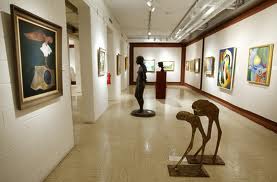
LaSalle University in Pennsylvania has announced plans to sell 46 paintings from its art museum in order to raise money for other strategic priorities of the university.
 

The university estimates it will raise between $4.8 million and $7.3 million, much of it for masterpieces including Jean-Auguste-Dominique Ingres’ Virgil Reading the Aeneid Before Augustus from 1865; Dame Elisabeth Frink’s sculpture Walking Madonna; Dorothea Tanning’s Temptation of St. Anthony;Georges Rouault’s Le Dernier Romantique (The Last Romantic); and  Albert Gleizes’ Man in the City (L’Homme Dans la Ville).

The Association of Art Museum Curators slammed the plan in a statement. “This decision goes against fundamental best practices of museums, the very standards that have built and shaped the country’s tradition of establishing and preserving art collections for the public trust,” the group wrote.

Both the American Alliance of Museums (AAM) and the Association of Art Museum Directors followed with a statement, and the Task Force for the Protection of University Collections also informed La Salle of its opposition to the plan, said Lyndel King, director and chief curator of the Weisman Art Museum at the University of Minnesota and cochair of the task force.
“Our major role is making sure that institutions understand the implications and potential consequences of what they are proposing to do,” King said, noting that other museums could refuse to lend traveling exhibits to the museum and essentially isolate it from collaboration with its peers. “We also want to make sure that donors and others know that this is being considered. It’s a black mark on the university. If I were a donor, I would certainly think about making another donation to a university that did that.”

Often university trustees and administrators don’t understand how inflammatory it is to sell art for purposes other than improving its collection and museum, or that the museums are an integral part of a college’s teaching, she said.

The task force formed around 2009 when Brandeis University in Massachusetts, like many schools stung by the recession and a loss in its endowment, proposed to close its Rose Art Museum and sell off the art. The museum, opened in 1961, had a loyal following who complained. Legal action ensued, and the plans eventually were scrapped.

For La Salle, a 3,200-student Catholic university that has struggled with a projected deficit and layoffs in recent years, criticism isn’t just coming from the art community. Alumni from other fields also have sounded off on social media. “Pretty soon it will be a trade school. Sad times,” Tierney Kelly, a 1998 graduate from Philadelphia, posted on Facebook. Kelly, a film publicist who majored in English literature at La Salle, said she visited the museum frequently as a student. Her projects for a class on Shakespeare took place there. “It was amazing to be able to conduct a class in a place like that,” she said. Later, she worked in La Salle’s admissions office and touted the museum as a selling point. “It was a gem for the university,” she said.

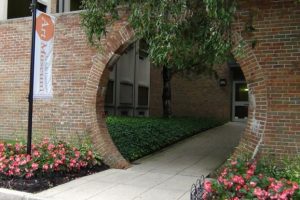
La Salle, in the Logan section of Philadelphia, intends to keep the museum open and replace works on display that are being sold with other pieces from its collection. But alumni worry that with the sale of such prominent pieces the museum won’t be the same.

Vinny Vella, a 2012 communications graduate who currently works as a reporter at the Hartford Courant, said the “paltry” amount La Salle stands to raise isn’t worth it. “La Salle has certain assets that make it valuable to the students and one of those assets has always been its art museum,” said Vella, a former Daily News reporter. “If La Salle is willing to sell off parts of its art collection, what else is it willing to sell?

 

UMAC receives a grant from ICOM-USA

UMAC is delighted — and grateful — that ICOM-USA granted us a subsidy towards the organisation of our annual conference at the University of Miami, Florida. 


Jointly organised with the Association of Academic Museums and Galleries (AAMG), UMAC expects this annual conference to be its largest ever.

See more about UMAC-AAMG 2018 here.

International Museum Day IMD 2018


UMAC invites all its members, as well as the broader community of university museums, collections and galleries to commemorate the INTERNATIONAL MUSEUM DAY 2018.

Promoted by ICOM, the IMD 2018 takes place around May 18. It is a global event, with more than 36,000 museums from 157 countries participating last year.

Read more and register your activities here.

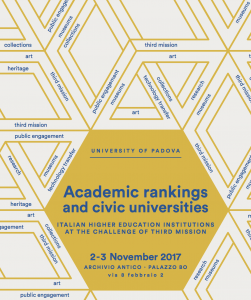
This week, Italy debates the ‘third mission’ of universities

In the beautiful Palazzo Bo, University of Padova, home to the oldest Anatomical Theatre in the world (1495), several national and international experts will debate the evaluation of ‘third mission’ activities in Italian universities. 

UMAC has been invited to reflect on the role of museums, collections and heritage in the ‘third mission’, and how this role can be measured.

The meeting is promoted by ANVUR, the Italian Agenzia Nazionale di Valutazione del Sistema Universitario e della Ricerca.

See programme here.

Davis Museum at Wellesley College, USA, Wins Best Soft Power Cultural Activation Award

On Friday, September 29, at the Leading Culture Destinations Awards event in London, the Davis Museum at Wellesley College won the Best Soft Power Cultural Activation Award. The honor recognizes the ingenuity and global impact of ART-LESS: the Davis Without Immigrants, an initiative, and intervention launched by the Davis Museum in February 2017.


ART-LESS responded to President Trump’s first executive order on immigration, issued on January 27, 2017—a proposed “Muslim ban” on entry to the United States that left many feeling alarmed, threatened, and frightened. The goal of the ART-LESS initiative was to demonstrate the critical role that immigrants to the United States have played in the arts, via both their creative contributions as artists and their philanthropic roles as museum donors. It also articulated the Museum as a public space for critical discourse on matters of national importance.


Dr. Claire Whitner, Assistant Director of Curatorial Affairs and Senior Curator of Collections, says “the Davis puts cultural pluralism at the heart of our mission; to take that seriously means to create programming that emphasizes that value and defends it when threatened.”


During this six-day event, which encompassed the American “Presidents’ Day” holiday, the Davis Museum de-installed or shrouded all works of art in its permanent collections galleries that were either created by or given to Wellesley’s art collection by immigrants to the United States. Approximately 120 works of art—roughly 20 percent of the objects on view in the Museum’s permanent collections galleries—were either taken down or covered in heavy black cloth. Signage was posted next to each affected piece to indicate “Made by an Immigrant” or “Given by an Immigrant.” The concept and its impact were dramatic, particularly in light of a sluggish response among most American museums. The initiative garnered extensive international media coverage.


“I believe that museums can be important political spaces,” said Lisa Fischman, the Ruth Gordon Shapiro ’37 Director of the Davis,” for generating discourse, social engagement, and smart activism. Through actions like ART-LESS, the Davis takes a stance on contemporary issues, modeling social activism and political integrity for students—for the next generation—and for the larger community. Particularly at this moment in the nation’s history, it is extremely important to demonstrate the impact of immigrants—past, present, and future—on American cultural life. ART-LESS posed an invitation: taking the Davis as a microcosm, one might extrapolate out and consider the tremendous impact of immigrants on the nation as a whole.”

https://www.wellesley.edu/davismuseum/

Call for Proposals UMAC & AAMG 2018

AAMG & UMAC CONFERENCE 2018, June 21-24, 2018

Lowe Art Museum, University of Miami, USA

Audacious Ideas: University Museums and Collections as Change-Agents for a Better World      

We live in a dangerous, often unstable, and environmentally compromised world. What can academic museums, galleries, and collections do to remedy this situation? If we are dedicated to teaching and training new generations of students, to serving increasingly diverse communities, how do we make a positive difference? How do we know we are making that difference?

Audacious Ideas asks presenters to share with us exciting and unusual ways that their museums, galleries, and collections are serving as change-agents. We’re interested in proposals that address how you are adopting new roles and adapting old ones, welcoming new constituencies while keeping current visitors, and creating new paradigms that make our institutions more valued and critical partners in higher education and in building a more peaceful and healthy world.  

More info and submissions here.

DEADLINE: 30 October 2017.